
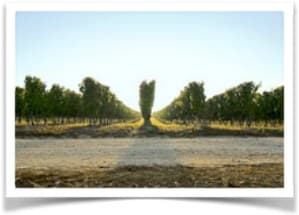
When visitors are asked what surprised them most at Clos de Pougette, the answer is often the same: the Kunekune pigs. We have 18 of these New Zealand pigs tending the vines by grazing between the rows, and it has become a visual signature of the estate. But behind the striking image lies a carefully considered agronomic and ecological choice worth explaining.
Why Kunekune and not another breed?
It's the question we get most. If we had used a standard pig breed (Large White, Landrace, Duroc), we'd have had two big problems:
- Adult weight of 200 to 300 kg: those pigs compact the soil, break the rows, damage vine roots at ground level.
- Rooting behaviour: they dig the earth looking for roots to eat. Disastrous for vines planted decades ago.
The Kunekune is radically different:
- From New Zealand, originally raised by the Maori (the name means "fat and round" in Maori).
- Small adults: 50 to 80 kg, three to four times lighter than a standard pig. They don't compact the soil and don't break anything.
- Natural grazers: they eat grass at the surface like a sheep, without digging. Part of their diet even comes from fallen leaves and fruit, and they don't need to root for nutrients.
- Very gentle temperament: not aggressive, not skittish, comfortable around humans, other animals and visitors. Easy daily handling.
It's the only pig breed you can seriously bring into an established vineyard without risking destroying it.
Why 18?
A herd of 18 individuals balances, for our 22 hectares:
- Useful grazing: too few and the effect on weeds is negligible. Too many and we overload plots, need supplementary feed, and the workload explodes.
- Family-scale management: 18 pigs are manageable by a family team without hiring a dedicated farmhand.
- Plot rotation: we can move a group off one plot and onto another based on seasons and ground cover.
It's not a dogma — it's the right empirical size we found for our farm.
The yearly cycle of the Kunekune at the estate
Winter and early spring: they can stay long on the same plot, grass is scarce, they eat plant residues and fertilise via droppings. The period where they help us most on weeding.
Late spring and summer: more frequent moves between plots to follow grass growth and avoid overgrazing.
Before veraison (mid-July to mid-August): they're moved off the vines so they're not tempted by ripening berries. They go to dedicated paddocks at the estate's edge.
After harvest (October–November): they can return between the rows — there are grape residues, canes, wild herbs to graze.
What it brings to the vines concretely
On the affected plots:
- Fewer tractor passes per season for tillage → less fuel, fewer emissions, less compaction.
- Less aggressive grass and more diversified cover (Kunekune eat dominant grasses, leaving room for other species — biodiversity gain).
- A more living soil to the touch: more crumbly on top, more earthworms, better water infiltration.
- No visible damage to the vines since we started — the initial fear that never materialised, thanks to the Kunekune choice.
The challenges this poses
Let's be honest — it's not a miracle solution:
- Daily supervision: 18 pigs are a living system. Count them daily, check the mobile electric fence, plan water and summer shade.
- Veterinary follow-up: health protocols (deworming, vaccines), tracking any births.
- Transport logistics: moving 18 pigs between plots requires the right gear and time.
- Image and explanation: we systematically have to explain to new visitors what we do, why, and that no, the wine doesn't taste "of pig".
The Instagram videos
To see our Kunekune in action, we post regularly on Instagram:
These videos are our best way to explain the practice to people discovering it.
What it changes for the wine
The fair question: does it change the wine's taste? Honestly: no, not directly. But indirectly:
- A more living soil → deeper roots → grapes more expressive of the terroir.
- Less tractor → less compaction → better drainage → healthier vines.
- More biodiversity → better disease resilience → fewer treatments (even organic).
Over 5 or 10 years these effects compound. We sincerely believe the Cahors that will come out of these plots in a decade will be deeper, tighter, more alive than from a standard soil.
A practice for the future?
Extensive pasturing integrated with cropping is called, in agronomic literature, silvopastoralism or integrated farming. The approach is increasingly discussed as regenerative viticulture emerges as the logical next step beyond organic.
A few pioneering vineyards worldwide test similar practices: sheep in Australia and Burgundy, geese in the Loire, cattle in Champagne. Kunekune remain more marginal but are gaining ground — there are herds in Burgundy, in the Loire, and here in the Lot.
In short
Having 18 Kunekune pigs in the vineyard isn't a marketing gimmick — it's a coherent answer to questions every organic viticulture asks: how do you fertilise without synthetic fertilisers? How do you weed without diesel or glyphosate? How do you bring living back into often-impoverished soils?
At Clos de Pougette we do it out of conviction, common sense, and — let's say it — because it brings real joy every day. Watching the Kunekune graze peacefully between the rows at sunset is an image that does good.
To see what this means in organic terms, read our Organic farming page. To meet the Kunekune in person, contact us.