
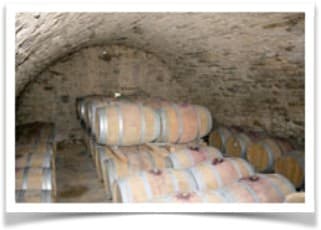
A well-stored Cahors is a Cahors that reveals itself. With time, tannins refine, fruit gives way to leather, undergrowth, truffle, and the mineral grain gains in elegance. But the wine needs decent conditions — otherwise you accelerate decline rather than transformation.
The four parameters that matter
1. Temperature
12 to 14 °C, stable. That's the ideal, and it's what a good natural cellar offers. If you don't have a dedicated cellar, what matters is stability: a closet at constant 18 °C is better than a room that swings 10–25 °C. Rapid variations destroy structure.
2. Humidity
60 to 80%. Too dry, the cork shrinks and air enters. Too wet, labels mould (cosmetic issue mostly). A natural cellar manages this naturally.
3. Darkness
As little light as possible. UV especially accelerates ageing and gives the wine a defect known as "lightstrike" (cabbage, sulphur notes). Avoid storing in glazed rooms or under fluorescent light.
4. Position
Lying down, for cork-stoppered bottles kept more than a year. The cork stays moist, tight, and prevents oxidation.
What to keep, and how long
Not all Cahors age the same. On our estate:
| Cuvée | Peak | Reasonable limit |
|---|---|---|
| Cahors Tradition 2023 | 2–4 years | 5 years |
| Clos de Pougette 2022 | 4–7 years | 8–10 years |
| Hauts de Pougette 2021 (oak) | 6–10 years | 12–15 years |
| Pierres Levées (older) | Drink now | Drink now |
BIB don't keep. Designed to drink within 12 months of bottling, and 6 weeks after opening thanks to the sealed pouch.
Signs of a well-aged Cahors
A mature Cahors offers:
- A robe shifting from deep purple to garnet with tile-red reflections.
- A nose where primary fruit fades into candied fruit, undergrowth, patinated leather, light tobacco, truffle and — on great cellaring wines — old spice.
- A silkier palate, with melted tannins, a finish more menthol and mineral.
- Surprising digestibility: a great mature Cahors goes down better than a young one.
Common mistakes to avoid
- Keeping an entry-level Cahors too long. A Tradition at €6.70 is meant to drink within 3 years. Beyond that it loses more than it gains.
- Storing standing up for several years (dry cork).
- Keeping bottles near the stove, fridge, or vibrations.
- Not keeping a cellar log. Note vintages, purchase dates, tasting notes at opening.
- Opening too young or too old. Ask the winemaker — we always indicate the likely peak.
No cellar? A few options
- A wine fridge if you'll keep ten or more bottles to age.
- A cool closet on the north side of the house, away from light.
- A shared cellar in some buildings, more stable than private cellars.
- Buying as you go: for occasional drinkers, better to buy small quantities regularly than store badly.
In short
A well-stored organic Cahors is one of the finest adventures a South-West vineyard offers. But it's not mandatory: most of our cuvées are delicious from release. Cellaring is an extra pleasure, not a requirement.
To start a small Cahors cellar, we recommend a trio: a Tradition to drink within 2 years, a Clos de Pougette to rest 4 years, and a Hauts de Pougette for a great moment in 7–8 years. See the order form to compose your case.