The "organic" label on a bottle reassures, but for many it remains a black box. What does certification really change, from vine to glass? And why does a Cahors estate like ours commit to a conversion that takes years and represents a real cost?
In the vineyard: what's forbidden
Organic certification, framed by the EU regulation and the French AB label, forbids in the vineyard:
- Herbicides (glyphosate and others). We manage weeds by tillage, mowing, or — at our place — with our 18 Kunekune pigs.
- Synthetic fertilisers. We use compost, manure, green manures (legumes seeded between rows).
- Synthetic chemical pesticides. The fungicides allowed are limited to copper (against downy mildew) and sulphur (against powdery mildew), in regulated doses.
- Systemic insecticides. Insect regulation is done by ecological balance (hedges, biodiversity, natural predators), and only as a last resort by natural products.
In the cellar: fewer inputs
The cellar comes with constraints too. Forbidden: industrial non-organic yeasts, some synthetic enzymes, several conventional additives. Sulphite ceilings are lower than the general rule (e.g. 100 mg/L for an organic red vs 150 mg/L conventional). Many organic winemakers go well below.
In the glass: a different taste?
Organic doesn't have a "taste of its own" — there's no sensory marker you could isolate blind. But it produces a different grape, and therefore a different wine:
- More acidity/sugar balance: less pushed by fertilisers.
- More salinity, more tension: living soils give more minerality.
- More digestibility: low-sulphite wines feel less aggressive on the finish.
- More terroir typicity: less smoothed by technology.
Not absolute rules — but a tendency that blind tasting often confirms.
The hidden cost of conversion
Going organic isn't a snap of the fingers:
- 3 years of conversion minimum, applying the rules without being allowed to label "organic".
- Lower yields, often, in the early years.
- More time in the vineyard: tillage, observation, fine preventive treatments.
- More risk in wet seasons where downy mildew can hit hard without the "chemical concrete" of conventional.
It's an investment of conviction. Strictly economically, organic pays off long-term — but that's not the main motivation for most winemakers who commit to it.
Why we did it
At Clos de Pougette, the conversion came from a simple conviction: you can't last five generations on the same soil if you exhaust and pollute it. Organic, for us, is a way to return the vine to itself — to trust it, to observe it more than to treat it, to keep this living soil for those who come after.
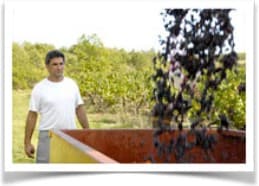
And concretely: we work next to this vine every day. Working organic means breathing better — no more glyphosate to inhale, no more handling of toxic drums. It's a decision for the estate's health and for ours.
In short
Organic isn't an absolute quality guarantee. It's a method commitment that durably changes the way of farming, vinifying — and often, the wine's character. On a terroir like Cahors, it reveals the mineral tension of Malbec on the causses, what technological vinifications sometimes round off.
To taste the difference, start with our Tradition 2023 or our Clos de Pougette 2022. And don't hesitate to compare with a conventional Cahors — the gap is often clear.